Sunday, September 13, 2015

“The most beautiful thing we can experience is the mysterious. It is the source of all true art and all science.” ― Albert Einstein


History's Oldest Murder Mystery
"Otzi the Ice Man"

Welcome to another glorious week, dear class.  Get ready for some interesting activities, videos, readings, and a one-of-a-kind real "cold case." It promises to be an activity-packed week, so get ready to learn something AMAZING!

NOTE:  If a video doesn't look like it belongs with a lesson, hit refresh.  My videos are switching themselves around--I'm not sure if it's just me or it's happening to other people. . .

ASSIGNMENTS FOR
 THE WEEK OF
SEPTEMBER 14-18


SOCIAL STUDIES

Monday:  More amazing caves to view before our assignment: CAVE ART! (Be on the lookout for something you might like to try drawing!)


Lascaux


Chauvet


  • A look at cave art must include a visit to the 14,000 year-old Bull and Cow Bison found in the Le Tuc d'Audoubert Cave in Ariege, France.
  • The Cosquer Cave  in Marseille, France is the only cave in the world with an entrance 115 feet below present-day sea level where cave art has been preserved from the flooding that occurred when the seas rose after the end of the last glaciation. (Clottes & Courtin 1994, 1996)
  • Along northern Spain's Cantabrian Sea coast, the cave called El Castillo has the oldest dated cave paintings--the oldest being a simple red disk.  At more than 40,800 years old, it pre-dates other European art by at least 4,000 years.  This date coincides with the earliest known evidence for Homo Sapiens in Europe.  Because of its age, it is the best evidence yet that Neanderthals might have been the first actual cave painters.
El Castillo


We've discussed and analyzed amazing cave art from thousands and thousands of years ago.  It's given us a glimpse into what life was like back then.  Cave art was a very important way for early man to communicate what was important--may-be it was the first true narrative, telling the story of fantastic hunts -- or maybe it just represented a way for early humans to say, "I was here." 
Task: Using the directions and materials provided to you, design and "paint" your own cave art for display on our bulletin board.


Wednesday:  This is the perfect time to pursue a great murder mystery! You and your fellow classmates are going to embark on a fascinating study of the world's oldest mummy and the mysterious events leading up to his death.  Are you ready??

We begin our story. . .
PBS NOVA
An Ice Man Murder Mystery


Aren't you curious?? I AM!  Check out these sites if you want to learn more:
  • Ice Man PowerPoint  HERE
  • Got 3-D glasses?  You can view a 3-D Otzi HERE.
  • So much information about Otzi can be found HERE (including something about a curse. (Scroll to the bottom.)
  • A National Geographic photo-story can be found HERE.
~
Thursday:  Read THIS article and complete THIS cloze. 

In Focus: Otzi the Ice Man


Friday:  Solve the Murder!

So, how do you think Otzi died?  What makes you think so? Read and discuss the following theories. 
After evaluating and discussing the four theories about Otzi’s death,

  • determine which one makes the most sense to you.
  • Provide evidence from what you have learned about Otzi to back up your choice. 
  • You will also need to address reasons why you think the remaining   theories are not correct.

Type your response in a well-constructed paragraph following the guidelines above.


SCIENCE


Did you ever wonder? . . .


And now, brought to you by (ta-da!)
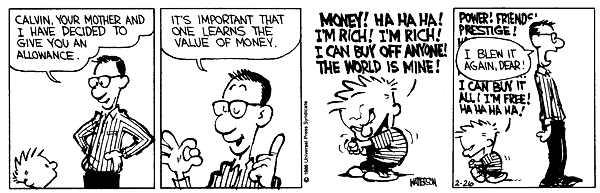
Calvin and Hobbes:
The Basis for the Scientific Method!


Formulating the question:


Doing a little research:


Making predictions:


Formulating an hypothesis:


Conducting experiments:


Analyzing data:

Reporting conclusions:


Tuesday:
We've been learning about Observations and Inferences, so let's see how much you remember!  Test yourself with THIS activity. We'll discuss it when you're done. Then we'll try THIS one together. 

Wednesday: Health Pretest 


Thursday:  
ON TO THE NEXT GREAT THING. . .


Understanding Variables

Independent Variable:  An independent variable is one that you can control or change.  
For example: you could do an experiment on the effect of sunlight on plant growth by putting one plant in a sunny window with plenty of light and the other in the back of your closet next to the pizza boxes, dirty gym socks, and that homework you said your dog ate. Hmm. . .

Dependent Variable: The dependent variable is the variable that you observe and measure. You can't change this one.  

You have no control over the plant; it's going to do what it's going to do. (Oh those plants; they never listen.) Your job is simply to observe what happens to it when you change the independent variable (in this case, the amount of sunlight). 


Controlled Variable: A controlled variable is one that you keep the same for all the conditions of your experiment. 
OK, so in order to get reliable results for your experiment,  you need to be sure that nothing else interferes with them. Being sure that both plants get equal amounts of water will guarantee that your results will reflect the amount of sunlight the plants received, not the amount of water.  I realize that rummaging your way to the back of your closet to water a begonia every day can pose a bit of a health risk, but scientists make sacrifices like this (well, maybe not this) every day.  I'm proud of you, Kimosabe.

Since we've been talking about plants, here's more on the subject. . .


Watch THIS if you want a little more explanation of dependent, independent, and controlled variables.  


Coming next: a few cool experiments! TBA!!


RESOURCES
  • You've got to check out MythBusters. "The MythBusters use the scientific method to prove or disprove common beliefs about physical science. Each episode explains a specific concept about the interactions between physical matter and the forces of nature that shape our world." Quoted from HERE. 
  • Want to learn more (about just about everything?)  Go to: HOW STUFF WORKS

MATH
CC.6.NS.4: Compute fluently with multi-digit numbers and find common factors and multiples

Monday: Lesson 1:3 Least Common Multiple,
 pages 14-16

Tuesday: Lesson 1.4, Greatest Common Factor, pages 19-20

(We'll see how far we get. . .)


Least Common Multiple


Greatest Common Factor:


SPELLING


Unit 2, pages 8-11
Test on Friday


READING

Monday: Introduction to Johnny Rawten
Tuesday:  Read/listen to "I Discovered Fire" and respond to the questions.
Wednesday:  Complete the questions from yesterday.


Remember that you are required to read 
at least one book per month. 
Book projects will follow.


A little clean-the-room-and-get-ready-to-go-home music:


(Call us crazy. . .)


Sunday, September 6, 2015

“Without labor nothing prospers.” ~Sophocles


Labor Day, 2015
. . .celebrating the dignity of work
"Labor Day, the first Monday in September, is a creation of the labor movement and is dedicated to the social and economic achievements of American workers. It constitutes a yearly national tribute to the contributions workers have made to the strength, prosperity, and well-being of our country." 1.

Why do Americans and Canadians celebrate Labor Day? 
- Kenneth C. Davis

Read more about the history of Labor Day HERE.

**********************
REMEMBERING 9/11


Go HERE to view History.com's 

9/11 video archive. 


-- TRIBUTE IN LIGHT --
 illuminating the Manhattan skyline annually in commemoration of 9/11 

********

ASSIGNMENTS FOR 
THE WEEK OF 
SEPTEMBER 8-11

SCIENCE
For starters, let's talk about  
SCIENTIFIC INVESTIGATION


We introduced the Scientific Method last week through a series of observation activities, remember? We explored some way-cool optical illusions and brain-stretching activities. There was method to my madness. (Get it? METHOD?) You see, "observation" is the cornerstone of scientific inquiry.  It's were all the investigations begin and it is the continuous thread that follows the process to its conclusion.


FYI: Don't confuse observing with seeing. Scientists don't simply watch, they actively engage in a process of figuring things out--of interpreting and reflecting upon what they experience.  Observation is a powerful tool that helps us figure out how the world works.

When we make observations, our brains immediately begin the process of gathering evidence, organizing ideas, and developing explanations (a.k.a. hypotheses) of a phenomenon.  How scientific of us! Of course, then we have to see if we're right (which is the testing part); that's where it gets really interesting!

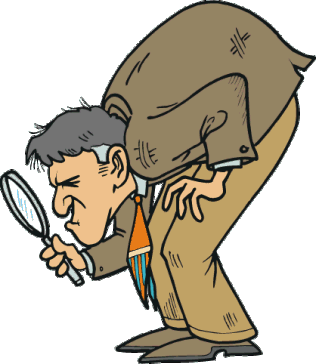
So anyway, back to optical illusions. (I did have a point to make here!) They're all about perceptions, right?  Well, clearly these perceptions aren't always correct. (Is this man just angry or is he a liar?) Sometimes, to make sense of what we observe, our brains are forced to fill in missing or ambiguous visual information, resulting in, you guessed it, inaccurate observations.  Well, scientists observed this problem (Get it? Observed?) and developed strategies, tools, and instruments that help improve and even increase human powers of observation.


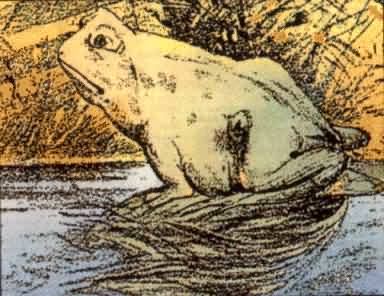
What do you see, a frog or a horse?


To recap:  "Observation consists of receiving knowledge of the outside world through our senses, or recording information using scientific tools and instruments." Oh, and guess what? The data you record during an experiment? It's all (ta-da!) observations!


Talk about Powers of Observation!
I remember seeing this picture on the cover of a 1984 National Geographic.  She was one of many Afghan refugees displaced by war and living in refugee camps in Pakistsan.  This girl's hauntingly beautiful eyes captivated the photographer.  Look at them in this crazy illusion!

GAZILLIONS more optical illusions can be found HERE and HERE.  (You're welcome!)
~
. . .And now on to our 
regularly scheduled activity!

Here's a great explanation of the difference between OBSERVATION and INFERENCE. (Very important!) Pay close attention; there will be stuff to do afterwards.


You can go over these slides more than one time, you know.  Show it till you know it! That's what learning is.


Then. . .
Have some fun with these
INFERENCE RIDDLES!


Now get with a randomly selected partner and follow the directions to complete this activity:


Wednesday: Complete Inference and Observation activity (above) 
Thursday:  Complete Observation vs Inference worksheet/quiz


Think you have it now? Alrighty then!

Friday: 

Let's take it to the next level by throwing PREDICTIONS into the mix.  Test your skill in being able to identify whether something is an OBSERVATION, an INFERENCE, or a PREDICTION. The correct answer follows each slide. What a great activity to do with a friend, a parent, a sibling, your neighbors (providing they're not cranky), or the family dog!  Parakeets, not so much. . .


TEST YOURSELF! . . .before I do! (mwaah, hah, hah!)


SOCIAL STUDIES


Early Humans Q & A: Find answers to lots of questions about early humans HERE. We'll be discussing these in class, and you may find some of them on upcoming quizzes. . .

Tuesday: "The First People: Calculating Clues from Bones" activity
Wednesday:  Use this Paleolithic Vs. Neolithic Chart to discover some of the similarities and differences between Paleolithic and Neolithic times. Complete this interactive Venn Diagram listing at least five differences and as many similarities as you can find. Save your document to your Drive, and print a copy for me.

  • Could you have survived the Ice Age?  Go here to find out!
  • What wiped out the big beasts? Check here.
  • Want to watch a Mammoth Mystery?  Check it out!
  • Here's a video (with associated links) about Neanderthals.  Learn something new! 


Thursday:  Learn about Neanderthal Man and complete the accompanying cloze activity.
Friday:    Ancient Art: 
  • The Niaux Cave, located in the northern footlills of the Pyrenees, is one of many in the region and has some of Europe's most impressive Palaeolithic rock art galleries of cave paintings, dating back at least 14,000 years.
  • The Lascaux Cave, located in southwestern France is a complex of caves that holds perhaps the most famous Upper Palaeolithic art estimated to be up to 20,000 years old.
  • Cave Art from Chauvet, France  Oldest art on record--some of them 32,000 years old.  Almost perfectly preserved after a rock-slide sealed the cave 25,000 years ago.


LANGUAGE ARTS

Tuesday: What haven't you finished? Book slides? animal slide? "I Can't..." Poem? ABC Autobiography?  Get it done!
Wednesday:  Found /Parallel Poetry using "Neanderthal Man"
Thursday: Share/Edit/Revise  
Found/Parallel Poetry using "Neanderthal Man"
Friday: Complete Found/ 
Parallel Poetry activity and 
copy/paste final draft into Writer's Notebook 
(include illustration, color, border).


READING

Tuesday:  Testing
Wednesday: Testing
Thursday:  Read/listen to "I Discovered Fire" and respond to the questions.
Friday:  Complete the questions from yesterday.


MATH

 CC.6.NS.4: Compute fluently with multi-digit numbers and find common factors and multiples


Tuesday: PICTURE DAY!
Wednesday:  Show What You Know (pgs. 6 & 7) corrections and Exit Ticket
Wednesday: Lesson 1.2, Prime Factorization, pages 10-12
Thursday:  Lesson 1.3, Least Common Multiple, pages 14-16


Prime Factorization:


Least Common Multiple:


SPELLING

Unit 1, pages 4-7


"Labor Day." USA for Kids. U.S. Department of Labor, n.d. Web. 05 Sept. 2015. 
Explorable.com (Sep 9, 2009). Scientific Observation. Retrieved Feb 21, 2015 from Explorable.com: https://explorable.com/scientific-observation  


Monday, August 31, 2015

"Let's raise up a hearty welcome, big and warm enough to hold you all ..."


Welcome, families, to the 2015-2016 school year and to NEXUS. This blog is written each week to provide a way for us all to stay connected.  For parents, assignments and other interesting topics are listed here so that you always know what your student is learning. 

For students, it's our place to meet every day. So-o much stuff to look at and do! You're going to like it here--
~PLUS~

Lots of great new ways to enhance your learning through technology 
are on the way! 
Here's to a great year!

Hey Parents,
Scroll to the end of this post for 
some important information!
Also. . .
PLEASE WATCH:


Tuesday, September 1:

There Is [Scientific] Method 
To Our Madness

The Scientific Method is integral to Science.  That
being said, I have news for you!; scientists don't always follow the sequential "Scientific Method" that is most often taught in schools.  They might skip a step, start in the middle and work outward, repeat steps. . .  They use their imagination, intuition, and problem-solving skills to discover scientific truths. That's what I want you to do. Don't just perform experiments step-by-step; problem solve. Figure them out. Got it?  Good! This is going to be fun!


Your basic information:  Interactive Scientific Method

Scientists rely heavily on their powers of observation.  How good are yours?  I challenge you to go HERE to find out! 

OBSERVATION
MEGA-CHALLENGE
~
Here's something to really test your powers of observation!  How many people can you "see" in this picture? I'll even tell you: there are 9. Can you find them all?  If you can, your powers of observation, your intuition, and your creative problem-solving capabilities are exceptional!

I have to say, the last ones were a challenge.


This is driving me crazy!


Can YOU figure it out???


How about these never-ending stairs?
You have to feel sorry for this guy!

Thursday, September 3:  Let's discuss THIS first. 

FINALLY. . .  Our first Lab! (Does anybody have change for a penny?) 

SOCIAL STUDIES


Here's a cool fact for you:  Scientists believe the earth is about 4.6 billion (that's 4,600,000,000) years old.  If every year was represented as an inch, 4.6 billion years would be equivalent to  383,333,333 1/3 feet-- or 72,601 miles. If you had that much string (just sayin'. . .), it would encircle the earth at the equator three times!  Long string = long time!

Scientists believe man has been on earth for about 200,000 years, which, using the same analogy, would be equivalent to about 3 miles, or half the distance to Vergennes.  (That's only .00004 of the time the earth has been in existance.) Puts things in perspective, huh?

The study of human history is fascinating, much debated, and overflowing with intriguing stuff to discover/analyze/challenge and learn! Get ready, everybody; we're about explore the physical and cultural characteristics of ancient people.

Wednesday, September 2:  View "The First Humans" PowerPoint and respond to the questions located at the end. (I will also provide a hard copy).  


Thursday, September 3: Let's watch this and be thankful we didn't live back then!


Friday, September 4

~ DIRECTIONS ~

Get on your camouflage animal skins, you pretend-prehistoric fifth and sixth graders; you're going hunting. This is no job for wusses. The animals you'll encounter are a bagillion times weirder than anything you've hunted before. They've got giant horns and spikes and teeth and claws and, well, let's just say your skills are going to be challenged.  You've heard of the Woolly Mammoth and the Smilodon (Sabre Tooth Tiger)? Get ready to meet the Glyptodon, the Arsinotherium, the Uintatherium, and the Coelodonta just to name a few.

Oh yea, I forgot to mention that you'll be traveling without weapons.  You work for Prehistoric Geographic Magazine and  your job is to come back with detailed descriptions of these animals -- what they look like, act like, eat.  Feel free to take pictures if you dare. Good luck, noble hunters, and best wishes for a safe return.

Check out this list of Prehistoric animals. Look here for more animals and  here for more ideas and some helpful descriptions. Guess where you can go to find information on specific animals?  What do you mean you don't know?  OK, I'l give you a hint. It's spelled G-O-O-G-L-E. I won't say another word.

As you wander, feel free to sing along to this timeless little ditty:


Lyrics with explanations:  


READING
Reading/Independent Work

The following [really interesting and informative] short articles are from MrDowling.com., a great educational resource for learning about history. I like that you can listen as he reads the article to you.  Be sure to follow along so that you can better complete the assignments that follow. 

Type your answers right online below the article, then "Share" with me. (Type in my email address and mail it to me using your name and the name of the article in the subject bar.) Do the same for the following short articles. I look forward to all your emails! Get them done by Friday, September 4.


I LOVE read-alouds and make this time of day integral to my program. You're never too old to be read to, and the time of relaxation and sharing builds community as much as it enhances comprehension.  A child's reading level doesn't catch up to his/her listening level until about 8th grade! There's great power in these shared experiences.


Read more about the value of reading to older children HERE.

~

Right now we're reading 
Dead-End in Norvelt by Jack Gantos.


MATH  
This has been a week of testing.  Lots and lots of information-gathering. . . sigh.


HOWEVER: Friday, September 4:

Multi-Digit Division (CC.6.NS.2) Compute fluently with multi-digit numbers and find common factors and multiples.

Assignment:

  • Show What You Know, pages 3 & 4 
  • Share and Show, pages 6 @ 7


Here's a little help with Long Division in case you need it:


Here's another--good review of steps:


LANGUAGE ARTS


Thursday, September 3 

"I Can't Write a Poem" poems (So-o funny; wait until you read them!)


Friday, September 4

ABC Autobiography


REALLY IMPORTANT 
PARENT STUFF


Welcome, welcome, welcome! I'm so glad you're here!  
I'm planning a really exciting year for your student--and it will all be here for you to access as well.  Expect to see videos and links to support student learning as well as assignments and displays of their work.


We are "going Google" and creating a learning environment that utilizes Google Classroom, Docs, Drive, and Gmail.  Students will be able to access, organize, complete, turn in their work, collaborate and communicate paperlessly. Writing is saved on Google Docs automatically, so it will be accessible to them wherever they have internet access.


COMMON CORE STATE STANDARDS: 

Today's students are preparing to enter a world more literate and demanding than ever before; we must ensure that they develop the knowledge, skills, and disposition necessary to succeed.  The Common Core provides students, teachers, and parents with a set of clear, consistent guidelines for what students should know and be able to do at every grade level.  The goal is for them to become self-directed learners, perceptive thinkers, effective communicators, collaborative team players, quality producers, and contributing citizens. (From Common Core GPS)

It's important to note that the Common Core is not an academic curriculum. What it does is set common standards for allstudents regardless of zip code, and it provides a common definition of what college and career ready education looks like.
  • It provides articulated, ubiquitous, and highly ambitious goals and objectives for all students.
  • It has rigorous curricula and methods for measuring and assessing growth.
  • It has developed the technological infrastructure to deliver the assessments (Smarter Balanced Assessment Consortium A.K.A. "Smarter Balanced") aimed at providing meaningful feedback to ensure students are progressing toward attaining the skills needed to succeed in college, career, and life.
Just as teachers work to align instructional materials and curricula with the Standards, students, too, must adjust--not only to increased expectations, but also to the new technology-based Standards-aligned assessments.  It is a time of seismic adjustment, and they may well appear weaker than on previous assessments.  Fear not; this will be temporary.

WANT TO LEARN MORE?


PARENT ROADMAPS:

REMEMBER:

Each child's success depends in large part on parents' understanding and support of the tenets of CCSS: 
  • Focus on increased text complexity of Informational/Technical texts.
  • Increased rigor and relevance
  • Problem-based learning
  • College/career readiness (from Common Core GPS)


Anyway. . .
WELCOME TO OUR CLASS BLOG!
Please visit often!

TERI


Back to school clipart: http://myschool.co.il/

Parents: http://www.narragansett.k12.ri.us/nps/images/parents.gif
Prehistoric history image:  http://www.prehistorictimes.com/images/ptlogo2.jpg
Animated Chrome image
Start here image
Parents image #2 
It's all about me image
Early Humans Powerpoint from http://earlyhumans.mrdonn.org/lessonplans.html