"Friend do it this way - that is,
whatever you do in life,
do the very best you can
with both your heart and mind...."
~from Lakota Instructions for Living
Think this is spinning, huh? Nope; it's all in your head! While your brain's busy trying to make sense of this wild-and-crazy image, those recurring lines and patterns trick it into thinking that it's actually moving. G'head-look away; did it stop? Boo-yea!
ASSIGNMENTS FOR THE
WEEK OF
OCTOBER 5 - 9
SCIENCE
Tuesday & Wednesday:Mad Scientist Experiments--guaranteed to drive your teacher crazy! Never fear; a good night's sleep and I'll be good as new. Thursday:Write up those lab reports.
Friday: Edit, revise, turnin. Then, on to our next great thing!
~
For Get-Ready-For-Halloween Science Experiments and an All-Around Cool Place to Go, ClickHERE. Just keep in mind when conducting your own experiments: one dumb mistake can have unforeseen consequences. . .
SOCIAL STUDIES
Monday: Finish up that WebQuest! It's due today!
Wednesday:Next, for the the setting of our adventure we'll need a map!
Use MAP OF MESOPOTAMIA for part of this assignment (the "creating a map" part), and complete the task described at the bottom of the link.
Bring your sunscreen. . . Oh, and look out for camel spiders! (You know me and spiders, so I won't include a picture here, but if you're brave enough and want to know more, HERE'S a link. Eeew!)
Thursday: We'll finish up, and while you're coloring I'll read the next installment of Johnny Rawten. He's back! Friday: TBA (We'll see. . .)
LANGUAGE ARTS
(Mood: the feeling or "vibe" you get from literature, art, video, or music. It is closely linked with everyday feelings; does it make you feel happy, light-hearted, carefree, peaceful, surprised, depressed, angry, fearful. . . ? Mood can be created through such things as sound, lighting, movement, timing, setting, rhythm, contrast, conflict and more.)
So let's talk about MOOD! The perfect topic for October, right?
Wednesday: Create a T-Chart and label the Left-hand column "Mary Poppins" and the second side, "Scary-Mary Poppins." While you watch the first trailer, think of words that describe the mood.
Jot down the mood you think it is creating and provide specific examples/evidence that create it. Look at the visuals and listen to the music. Watch for colors, fonts, and the way the characters interact.
Discuss it -- Think-Pair-Share: What is the general mood of the trailer? (Provide examples.)
Then watch the second video. (You may want to watch it more than once!) This is a video where someone took actual footage from Mary Poppins and added captions, scary music, and lighting effects to make a very creepy and haunting version of the once jolly world of Mary Poppins.
Repeat the same process of describing the mood (visuals, music, colors, character interaction) and discuss it -- citing specific things that created the mood.
Discuss it -- Think-Pair-Share: What is the general mood of this trailer? (Provide examples.)
Assignment (Use QuEEC to answer first two questions; include T-Chart, and turn in!)
Why was it so easy to detect the mood in these two video clips? What strategies did you use?
How do we figure out the mood of a story, book, or poem when there is no music, no characters to watch, no special lighting to see?
Complete a final draft of your T-Chart based on your notes and class discussions.
READY? Set? Go! Video 1:
Hold on to your hats: here's Video 2:
Thursday: We're being pretty MOOD-y this week! This week we're going to discuss Setting & Mood. Here's the website for"Setting & Mood"just in case you lose the paperwork I provide to you. Questions are also written out for your convenience. Please answer in complete sentences using QuEEC.
Friday:Writing Your Own Scary Stories (oooooohhh!) Writing a scary/mystery story is one of the most exciting ways to improve writing skills. Think about it--it's the kind of fiction you love; the characters are like you, the plot has lots of puzzles to solve, and ooh, the suspense--well, it's just hard to put down!
Here's everything you'll need: Handout, directions, and nice, mood-enhancing background music. Coooool beans! We'll share these by flashlight when they're done! (mwaah-hah-hah!)
MATH Monday: Correct practice test from Friday--go over problem areas together Tuesday:CHAPTER 1 TEST Wednesday: Finish CHAPTER 1 TEST --Correct & Discuss Thursday: Introduce CHAPTER 2 Assign "Assessing Prior Knowledge," Correct and discuss. Play "Guess the Word" (page 68A) Friday: Lesson 2.1 Fractions & Decimals -- Assign pages 71&72. Homework pages 73-74.
Math support for converting decimals to fractions:
Have I got news for you! Tonight we will be given a rare opportunity to witness a spectacular celestial event--a lunar eclipse with the moon at its closest point to the earth. This "Supermoon" lunar eclipse has happened only 5 times in the last century and last occurred more than 3 decades ago, in 1982; it will not be repeated until 2033! Expect the moon to be 30% brighter and about 14% larger than normal. Also expect that it will have a deep rusty-red color. "Blood moons," as they are sometimes called, have had a bad rep down through the ages--not to worry, though. Their color is simply caused by sunlight being scattered by the Earth's atmosphere.
Visibility Map
At 9:07 EST the partial eclipse begins, and at 10:11 the full eclipse will be visible for approximately 1 hour and 13 minutes. Only eastern Asia and Australia will miss it completely.
Sorry, guys!
Most "Super" Supermoon of the Year
ASSIGNMENTS
FOR THE WEEK OF
September 28-October 2
SCIENCE . . .and the Scientific Method Tuesday: Let's "RAP" this thing up: Get ready for a great way to remember the steps of the scientific method and learna bit of history, too! You'll meet Galileo Galilei whose cannonball experiment got him in trouble with the church. . . Say what?? We'll start first with a Rap, then a little explanation with the help of interactive lyrics, and then a quick review. LookHEREfor everything you'll need to be a Scientific Method Master!
Here's a cool "MOON-THEMED" experiment using the Scientific Method that was carried out by astronauts on Apollo 15 in 1971: According to Galileo, a feather (if air wasn't pushing on it) would fall at the same speed as a hammer. Well, Apollo 15 astronauts brought a hammer and a falcon feather to the moon in 1971 to test Galileo's theory. (They chose a falcon feather because "Falcon" was their lunar module's name.) While standing on the moon (no air), one of the astronauts dropped the hammer and falcon feather at the same time, and, well, check out what happened:
Atta way to go, Galileo; thanks, Apollo 15!
FYI: Apollo 15 was the 9th manned mission in the Apollo program and the 4th to actually land on the moon. It was also the first of the Apollo "J" missions (long stays on the moon) to have a greater focus on science than ever before. The astronauts spent 3 days on the moon and a total of 18.5 hours outside the spacecraft. This mission introduced the Lunar Roving Vehicle! At the time, NASA called it the most successful manned flight ever achieved.
INDEPENDENT PROJECT YOUR TURN: This is a home project.Look HEREor in classroom resources to find an experiment you can conduct that demonstrates the scientific method. Use THIS worksheet to organize your experiment. Get your materials together and practice it (at home) before you share it at school. Important guideline: there will be no two alike. Let's have a crazy demonstration day on (Due date:) Tuesday, October 6.
Thursday: We'll divide into two teams to see how you do on this online Scientific Methods quiz. If one team doesn't get the correct answer, it's open to the other team to answer. Find the online quiz HERE.
SOCIAL STUDIES
Farewell to you, whose story's told On limestone walls in caves of old What made you choose to illustrate With such detail, to innovate? Stone tools and weapons that we've found In great abundance in the ground Signified ability To make and plan creatively. What it took to stay alive-- The immense effort to survive-- The hunter was the hunted, too So strategies were used by you. That proved you had a thinking brain And common goals, you'd much to gain By cooperating willingly -- A shared intentionality. Culture helped you to evolve Diversify and problem-solve Your vast, resilient human niches Developed through natural processes. ~ Mrs. M.
Monday:Prehistory B.H.T. today. Follow the [very simple] directions to complete. Good luck!
NOW IT BEGINS. . .
OUR NEW FOCUS IN SOCIAL STUDIES IS ON THE FIRST GREAT CIVILIZATION, KNOWN AS MESOPOTAMIA.
~
Mesopotamia is a name, interestingly enough, later given to the people of the "Fertile Crescent" by the Greeks. These people lived in a haphazard climate--one where summer temperatures reached as high as 110 to 130 degrees Fahrenheit. Eight months of the year were dry, turning the Tigris and Euphrates rivers a sluggish brown. Winter was the rainy season. Melting snows from the Taurus and Zagros Mountains also drained into the rivers, causing them to flood, often destructively. Young travelers, we are about to enter this unpredictable and often unfriendly environment. Never fear, we'll travel together. Better get packed!
Ahh, the land of the
first great civilization...
Friday:Welcome, ancient travelers, to the Fertile Crescent, also known as Mesopotamia, which meansland between two rivers. You are about to embark on an important information-gathering quest in the world's first great civilization. This will be one of many we will visit this year. Complete this Scavenger Hunt in the packet I provide by using the links below. This is an important task, young travelers. Safe journey; do well!
Monday & Tuesday: You have (hopefully) finished reading your book for September. (Monthly books -- one at the very least -- are a requirement in my class.) Beginning today in Language Arts, we'll create a three-fold brochure advertising your book using pictures that you have found or drawn. This brochure should really persuade people to read it, so give it all you've got!. Your brochure should contain the following (refer to the picture above if needed):
A Front Cover providing the TITLE, AUTHOR"S NAME, and an ILLUSTRATION of a favorite scene from the book.
An Inside Flap (when you lift up the cover) that lists the MAIN CHARACTERS with a BRIEF DESCRIPTION of each (who they are in the story). Write the wordsMain Characters at the top of this flap.
An Inside Left Panel (see illustration above) on which you write Settingand describe WHERE and WHEN the story takes place. Be as descriptive as possible. This may include an illustration or map.
An Inside Center Panel on which you writeSummary and briefly TELL WHAT THE STORY IS ABOUT. (Summarizedon'tretell. . .)
An Inside Right Panel on which you tell about the most EXCITING, FUNNY, or INTERESTING part of the story. Write Climaxat the top of the panel.
A Back Panel on which you write a RECOMMENDATION for the book. Did you like it? Use details to explain why. Give it a rating from 1 - 10. Write Recommendation at the top of the panel. Write your Name at the bottom of this panel.
Plan on creating a decorative border on each panel. Neat & colorful borders make it look so-o very spiffy!!
For today:
Plan out how you want your brochure to look on a piece of computer paper.
Then, on lined paper, write and edit your information for characters, setting, summary, climax and recommendation in preparation for the next step, which is. . .
When I return tomorrow, I'll check over what you've done and provide you with art paper to make your brochure. You are a classroom of brilliant innovators and artists--these will be beautiful--the BEST you've ever done! Wednesday: Hmm. . . not reading, huh? We're setting up Book Report Contracts for October to help you out. Be prepared for random checks. Parent signatures are required at the end of the month. Keep these in your trapper keepers! Keep working on your September brochure -- it's due Friday! Thursday: Brochures--Get them done! Due tomorrow! MEANWHILE: Thursday & Friday:We're going to delve into our innermost fears (well, kinda). What are you scared of? For me it's spiders. (Ewww!) For some of you, I'd say it's homework. (Am I right or am I right??) It could be a lot of things, real or made-up. This is a fun poetry assignment where we write 4 couplets on the scary thing of our choice. We'll illustrate them after we're finished and hang 'em up! Let's confront those fears!
MATH Monday: 1.8 Division of Decimals by Whole Numbers. Complete Share & Show. Homework pages that follow should be removed and put in homework folder to complete for tomorrow.
Thursday, September 24th is Open House! Please come and check out where your students spend their day. A Celebration for summer reading starts at 6:00 PM, followed by classroom visits from 6:30ish to 7:00. I can't wait to see all of you! Oh yes, and make a note that Parent Conferences will be held on October 15th (from 3:30 to 7:15 PM) and 16th (from 8:00 to 10:35 AM). A sign-up sheet will be available at Open House.
Variables -- Find a great explanation HERE. Another quick explanation can be found HERE. Check your understanding HERE. Thursday: Qualitative vs Quantitative data -- Check your understandingHERE.
SCIENTIFIC METHOD
Step 1: Ask a question
Step 2: Do research
Step 3: Form a hypothesis
Step 4: Perform an experiment
Step 5: Record and organize your data
Step 6: Analyze your results
Step 7: Draw your conclusions
To learn the steps of the Scientific Method, try coming up with a mnemonic! They're fun, and they help you to remember! Undoubtedly, yours will be more creative than mine:
All Day Friday, People Raced Around Downtown.
Friday: Study! Monday is (ta-da-da-da, da-da. . .) Vocabulary & Steps of the Scientific Method Test time!
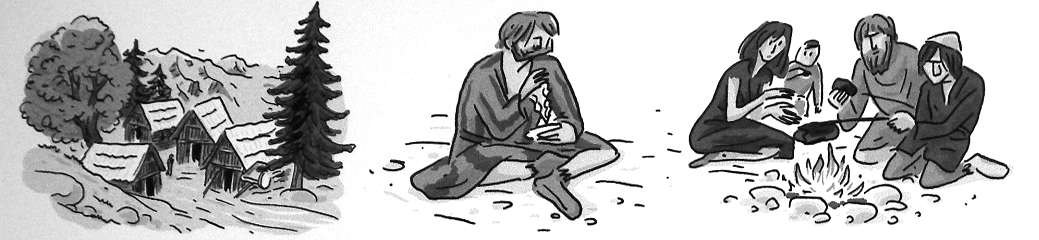
After evaluating and discussing the four theories about Otzi’s death,
determine which one makes the most sense to you.
Provide evidence from what you have learned about Otzi to back up your choice.
You will also need to address reasonswhy you think the remaining theories are not correct.
Type your response in a well-constructed paragraph following the guidelines above. More about Otzi? Look HERE. Wednesday:Time to get your art on!
Create a poster of Otzi, label his clothing,tools, food (LookHEREfor one example), and where he lived. (Find an exampleHERE.) Include a paragraph describing what his remains tell us about early humans. Thursday: The Journey of Mankind interactive HERE. Print the map found HERE and trace, coloring the water blue, the land green, and the migration routes orange. Look HERE to complete the cloze foundHERE.
Monday: Review/practice prime factorization. Correct and repair test on pages 34-35 6.NS.B.3 Fluently add, subtract, multiply, and divide multi-digit decimals using the standard algorithm for each operation.
Thursday: Reinforced multiplication of decimals--two-sided worksheet for class/homework. (Get it done! xoxo)
Friday: I'm not here, so. . . Let's grade yesterday's work. If it's not done, guess what?? Everyone else can play these cool decimals games. HERE's a bunch, or get with a partner and playDecimal Jeopardyor maybe one of these Math Games. Woo-hoo! Remember, the key is to practice, practice, practice . . .and maybe have a little fun in the process!
LANGUAGE ARTS
Standing Bison from Altamira, Spai
Monday:
"Categories" puzzle piece
Tuesday: Capitalization packet
Wednesday:
The Bulls of Altamira informational reading activity/summary