Sunday, November 8, 2015

"We may not know them all, but we owe them all. . ."


"On the 11th hour of the 11th day of the 11th month of 1918, an armistice, or temporary cessation of hostilities, was declared between the Allied nations and Germany in the First World War, then known as “the Great War.” Commemorated as Armistice Day beginning the following year, November 11th became a legal federal holiday in the United States in 1938. In the aftermath of World War II and the Korean War, Armistice Day became Veterans Day, a holiday dedicated to American veterans of all wars."1.


After watching the video (above) and reading THIS article, write a 20-word GIST (template HERE)  about Veterans' Day.  We'll share on Wednesday, November 11th.


ASSIGNMENTS 
FOR THE WEEK OF 
NOVEMBER 9-13
Science

Plate Tectonics
Colored "Puzzle Pieces" show the tectonic plates.   Watch as the names of the 
plates appear in white, & then the shapes of the continents appear in black.

The Early Earth & Plate Tectonics


Plate Tectonics WebQuest
OK, awesome quest seekers! Use the dynamic links on THIS site to complete the packet provided to you.  Responses should be well thought out and complete. This will become a part of your Interactive Science Notebook. 
Due no later than Friday.
Plate Tectonics Song
to the tune of the Adams Family theme song
Convergent is colliding
Divergent is dividing
Transform, it is sliding
We are the plate boundaries.
duh-na-na-na
duh-na-na-na
duh-na-na-na  duh-na-na-na duh-na-na-na
   
Need to learn the melody?


Independent work:  
  • View "Mountain Maker, Earth Shaker" interactive activity HERE. 
  • View "Tectonic Plates and Boundaries" HERE.
  • View "Tectonic Plates, Earthquakes, and Volcanoes" HERE.  
  • Complete Plate boundaries interactive notebook pages. Materials will be provided to you. 

"Ring of Fire"


Social Studies
Monday:  Ziggurats due today!!  Finish up TACKKS. Share with a partner using the template I provided you. Complete checklists and turn them in.

Tuesday:  Test on Ancient Mesopotamia!  

Remember to Review:
Wednesday: Correct tests.  RETEST?? Hope not! Worksheets/Study Guides will be provided to complete by Friday if necessary.

Thursday:  Finish up/polish TACKKS and send them to me to review. We'll make corrections on Monday; then TACKK will be ready for publication on the blog.

Friday:  RETEST.  Eeewww! (Also, be sure all TACKKs are sent to me if they haven't been already.)  It you don't need to retake the test, you get a study hall/silent reading time
Walkin' on over to Ancient Egypt!


Language Arts


Ooooh, I just love it when 
a good story comes together!


Monday:  Looking at our Work--It's Called Revision! Using the rough draft you should have completed for today, highlight at least 5 places where you "told" not "showed." Rewrite those examples using techniques learned in the follwoing videos.  Good luck!


SHOWING, NOT TELLING


. . . More Showing, Not Telling . . .


Tuesday:  "How do I write dialogue!" you ask. Get ideas by being weird. . .
  1. Eavesdrop (to get ideas for your characters--mannerisms, behaviors, ways of talking to each other). 
  2. Pretend your characters are real. (Or, if they are real, refer to #1.) 
  3. Mutter to yourself. (C'mon, I do it all the time._) and write it all down.
Wonderful Ideas for Dialogue, heh? Let's review:


Wednesday -- Friday:  Writing Dialogue with Calvin & Hobbes  -- A Multi-Day Extravaganza Using My Faaaa-vorite Cartoon! I'll provide the handout, you provide everything else!  Sounds like a deal, huh?


Look Who's Talkin'!


SPELLING 
Unit 6


READING 
Bud Not Buddy
By Christopher Paul Curtis

Along with classroom discussion/activities:

Monday:  Chapter 14 -- Complete Exit Ticket.
Tuesday:  Chapter 15 -- Complete Exit Ticket.
Wednesday:  Chapter 16 -- Complete Exit Ticket 
Thursday: Chapters 17-18 --Complete Exit Ticket. 


Remember:

You can read Bud, Not Buddy online HERE. 

and the audio can be found HERE!


Just a sweet little reminder. . .
Don't forget to fill out your Reading contract!
Make my day . . .


Extra Credit: 
Plate Tectonics Online Video Guide
Follow the links provided to watch two different plate tectonics videos. I have provided a handout to you--fill in the blanks as you go along.
Video 1:  100 Greatest Discoveries:  Plate Tectonics   (#1-6)
Video 2:  National Geographic:  Plate Tectonics - The Changing Shape of the Earth  (#7-19)


1.  History.com Staff. "Veterans Day." History.com. A&E Television Networks, 2009. Web. 08 Nov. 2015.
Veterans' Day image  Veterans' Day gif   earth like a puzzle animated image  spinning globe Oooh Calvin & Hobbes cartoon

Sunday, November 1, 2015

"The long unmeasured pulse of time moves everything. There is nothing hidden that it cannot bring to life, nothing once known that may not become unknown. ~Sophocles


I just spent the last hour turning all my clocks back.  
So much for gaining an hour. . .


Why, exactly, did we ever bother with 
Daylight Savings Time?
A History of Time-Keeping


Supposedly it was to make better use of daylight and conserve energy. Daylight Savings Time has only been in use for about 100 years, but, believe it or not, ancient civilizations were known to have a similar practice where they would arrange their schedule to the sun's schedule. (I think that's called adapting.)

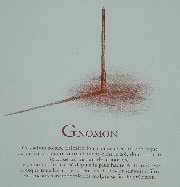
There was a time when people limited their activities to daylight. People used shadow-casting devices called Gnomons to measure basic divisions of time. Twelve noon was determined by the sun passing the local meridian, creating the shortest shadow. 

Gnomons weren't particularly accurate because they measured solar time, which changed a bit each day. Clock time, on the other hand, measured the same amount of time (24 hours) between one noon and the next, regardless of the season. 

The Egyptian Sundial (1500 BCE) showed the earliest evidence of dividing the day into equal parts. Marks on the dial linked the gnomon's shadow to a standardized time. With early sundials, the number of hours in any period of daylight remained constant throughout the seasons, which meant that hours in the summer lasted longer than hours in the wintertime.  

Ancient Romans used the Sundial.  Wealthy Romans even carried mini-sundials in their togas! OUCH! They divided the day into ante meridiem (before midday) and post meridiem (after midday). Today we use the abbreviations a.m. and p.m.  So now you know. . .

Other than the gnomon, The clepsydra is likely the oldest time-measuring instrument.  Babylonians may have been the ones who invented it. In 1600 BCE, maybe even earlier, the clepsydra was also used in Egypt to measure
predetermined periods of time. Unlike the sundial, it could be used on cloudy days and at night. It was simply a container that relied on a steadily rising or falling water level in a container to mark the passage of time. The inside of the container was etched with graduated "hour" marks.

The Clepsydra
Notice the 24-hour clock

The Romans used a version of the clepsydra that consisted of a floating rod that rose (as a result of a regulated water flow) to mark the time of day. This water flow was eventually used to move hands on a circular face that had 24 "hours" marked on it. The hands would change based on how much water flowed into the clock. (Owning a water clock was a status symbol--only rich people could afford one.)


Water clocks were used to control how long people were allowed to talk in the Senate. (Romans sure loved to go on and on. . .)  Two water clocks equaled about one hour.


Of course, it had other uses, like keeping track of time in a race.

ANYWAY. . . you can go HERE to read more about the reasons behind (or excuses for, depending on your point of view) Daylight Savings Time.   What do you think:  Should we keep things the way they are (switching times twice a year), go for year-round Daylight Savings Time, or have year-round Standard Time?  Write down what you think, and provide solid reasons for your choice. Due THURSDAY!


Whatever we may do to the contrary, 
mother nature has determined 
the seasonal rhythms of daylight and moonlight, 
sunshine and shadow, 
and it is good.


ASSIGNMENTS FOR 
THE WEEK OF 
NOVEMBER 2-6

Science

 Plate Tectonics - A Documentary


Tuesday:  From last week: Cut out your colored puzzle pieces and piece together how you think Pangea looked. Then, to preview PLATE TECTONICS--read article, then scroll to the bottom to answer 2 questions. 

FYI:


 We'll also set up Earth Science Interactive Notebooks and include our Pangea puzzles.


Wednesday:
  • Close read of "Alfred Wegener and Continental Drift"
  • Group Activity:  Complete "Writing Frame:Continental Movement

The Sid Shuffle -- Contintental Drift


Thursday (to finish up Monday):  
Plate Tectonics WebQuest
OK awesome quest seekers! Use the dynamic links on THIS site to complete the packet provided to you.  Responses should be well thought out and complete. This will become a part of your Interactive Science Notebook.


"Ring of Fire"


For more information:


SOCIAL STUDIES


Your Plan of a Tackk

Everyone seems to really be into their projects, which we will finish up in the next couple of days.  Here's what I need from you.


(1.) Share your text with me.  For those of you who deleted it already, you'll have to cut and paste your text onto a new document.  This needs review -- and perhaps editing -- before we publish. 
(2.) Be sure you have the urls for each and every site you used.  Did you put these on a Google Doc like I asked?  If not, you have a bit of backtracking to do here, too.  Bummer! 
(3.) Share your Tackk with a peer. Use the Tackk Checklist and Content Options to guide you.
(4.)  Final touches will be made to TACKK projects in preparation for their being displayed on this blog!


Ziggurat models due Monday!  
(Want to know why? No School Friday. . .)
  • Does your Ziggurat demonstrate your best effort?
  • Are there at least four levels?  
  • Are all the parts labeled? (Go HERE to find the 8 parts and where they're located.)
  • Is it an engineering masterpiece?  


~ALSO~

Mesopotamia Test on 
Tuesday, November 10
Be ready by reviewing:


5 Core Beliefs from The DBQ Project, committed to rigorous writing and thinking activities
for students of all skill levels.

LANGUAGE ARTS


I love Calvin & Hobbes! I love the way Bill Watterson tells a story with words and pictures. Can't you see how easily this comic strip could become a great narrative?  
Last November, Watterson, a very private, reclusive man, surprised his legion of adoring fans by creating his first comic strip in 20 years. It was a 15-panel comic strip poster promoting the Angoulême International Comics Festival, held in Angoulême, France last year from the end of January through February. 

This comic strip may lack words, but it tells a rich and expressive story.  
Take ten minutes to write a short narrative based on this comic strip.


Remember narratives are just stories. 
Now that we've practiced writing narratives with our "Scary Stories" assignment, we'll begin our PPPNPs -- our
Portfolio-Perfect Personal Narrative Projects --   

We're writers. Amazing, elaborate stories are within each of us, just begging for an audience. Our greatest challenge [in crafting narratives] is "beginning" well--that is, producing the kind of lead that will grab the reader and not let go.  It doesn't matter if it's fiction or non-fiction, a strong beginning is what sets the tone, establishes the intent, the purpose, of the piece, and determines the author's "voice." Want to captivate your reader? Begin well.  

We'll explore THIS site for some insight (a little word play, here) into writing great beginnings for our own narratives.  Want some advice?  Pay attention to what good writers do. Play around with different ideas for leads and see what works best for you. Don't be boring. (Sorry; it had to be said. . .) 

We'll gather some tools this week and craft our own beginnings to PERSONAL NARRATIVES. Exemplars will be posted on this blog!


Nothing grabs a person's attention like a good beginning.  Check THIS out for great examples of how to write a narrative lead. 


PERSONAL NARRATIVE WRITING  -- STEP-BY-STEP SUPPORT.


MATH

6.NS.A.1 Interpret and compute quotients of fractions, and solve word problems involving division of fractions by fractions, e.g. by using visual models and equations to represent the problem.


Monday: Lesson 2.8: Model Mixed Number Division.   Share & Show pgs. 115-116. Homework, pgs. 117-118.
Tuesday:  Lesson 2.9: Divide Mixed Numbers.  Share & Show pgs. 121-122.  Homework, pgs. 123-124
Wednesday:  Lesson 2.10: Problem-Solving - Fraction Operations pgs. 127-128. Homework, pgs. 129-130.
Thursday: Chapter 2 Review Test, pgs. 131-134

Model Mixed Number Division
Teacher Ideas HERE


Dividing Mixed Numbers


Problem-Solving - 
Fraction Operations


SPELLING 


Test from last Friday
Because of the short week, we won't have Spelling this week. Be sure you're all caught up and turn in your books!


READING 
Bud Not Buddy
By Christopher Paul Curtis

Along with classroom discussion/activities:

Monday:  Chapter 12 -- Complete Exit Ticket.
Tuesday:  Chapter 13 -- Complete Exit Ticket.
Wednesday:  Chapter 14 -- Complete Exit Ticket 
Thursday: Chapter 15 --Complete Exit Ticket. 


Remember:

You can read Bud, Not Buddy online HERE. 

and the audio can be found HERE!


Oh, by the way. . .
Have you filled out your contract 
for November?
Make me smile. . .