Tuesday, May 24, 2011

ANCIENT GREECE AND ROME


http://rome.mrdonn.org/comparison.html
1. Create a chart showing the difference between Greek and Roman gods. Provide name and brief description for each of the 12 major gods—the Olympians: Aphrodite, Apollo, Ares, Artemis, Athena, Demeter, Dionysus, Hera, Hermes, Hephaestus, Poseidon, Zeus.

List of Greek/Roman names for 12 Olympians:

http://rome.mrdonn.org/romangods/12gods.html

Brief description of Greek and Roman gods: click on links for each:

http://www.greek-gods-and-goddesses.com/

Chart that includes 12 Olympians as well as others:

http://www.roman-colosseum.info/roman-gods/greek-and-roman-gods.htm

Want an interactive site? Here you go!

http://www.mythweb.com/gods/index.html

2. Choose a god or goddess from the list you created and write a short (typed) description. Then design a shield (four inches in diameter) with a symbol that exemplifies that god or goddess.

Click on your god or goddess of choice to read about their characteristics:

http://rome.mrdonn.org/romangods/12gods.html

3. Greek and Roman Architecture:

Draw three kinds of Greek columns and write a brief description of each. Indicate which columns the Romans continued to use.

Really good information and illustrations:Align Center

http://greece.mrdonn.org/columns.html

Information plus illustrations of tops of columns:

http://library.thinkquest.org/6339/buttons/index.html

4. Constellations: Choose a constellation to transfer onto ½ sheet of black paper: http://www.dibonsmith.com/constel.htm

a. Place constellation over black paper.

b. Use a thumbtack to poke holes where stars are located.

c. Use a silver sharpie to mark where the holes are located.

d. Use silver sharpie and a ruler to connect the dots (as seen in the constellation picture).

e. Use silver glitter to mark the location of the principle stars. f. Write a brief description of the constellation myth.

5. Comparisons: What was the myth that explained how Athens got its name? What was the myth that explained how Rome got its name?

Greece (click to enlarge picture and caption):

http://theoutcast1821.deviantart.com/art/How-Athens-got-its-name-197883819

Rome: http://www.historyonthenet.com/Lessons/Legendofrome/legendofromemain.htm

Sunday, May 22, 2011

LESSON 4: STUDYING FOR TESTS

http://playingyouragame.com/wp-content/uploads/2008/11/j01186631.gif

Which kinds of tests do you find to be the easiest? Which do you find the hardest? Visit at least two Internet sites and write down hints for studying for the types of tests you find most difficult. (Choose 2). Share results with the class, and turn in for a grade.

Internet Resources

Essay questions:

http://www.naho.ca/qaigitsi/english/essay_questions.php?print=1

http://www.studygs.net/tsttak4.htm

http://www.geosoc.org/schools/pass/tsttak4.htm

http://www.how-to-study.com/study-skills/en/taking-tests/96/studying-for-an-essay-test/

http://www.asdk12.org/Parents/testing/EssayTestTips.pdf

Short answer test:

http://www.geosoc.org/schools/pass/tsttak5.htm

http://studygs.net/tsttak5.htm

http://www.testtakingtips.com/test/short.htm

http://www.colonial.k12.de.us/docs/Test%20short%20answer.pdf

http://www.test-preparation.ca/study-center/short-answer-and-fill-in-the-blank-test-strategies/

Multiple-choice:

http://www.geosoc.org/schools/pass/tsttak3.htm

http://www.how-to-study.com/study-skills/en/taking-tests/44/multiple-choice-tests/

http://studygs.net/tsttak3.htm

http://www.test-preparation.ca/study-center/tips-for-taking-multiple-choice-tests/

http://www.geosoc.org/schools/pass/objectivetest.htm

http://www.geosoc.org/schools/pass/objectivetest.htm

True-False:

http://www.geosoc.org/schools/pass/tsttak2.htm

http://www.how-to-study.com/study-skills/en/taking-tests/78/true/false-tests/

http://www.studygs.net/tsttak2.htm

http://www.testtakingtips.com/test/true.htm

http://www.geosoc.org/schools/pass/objectivetest.htm

Matching:

http://www.geosoc.org/schools/pass/objectivetest.htm

http://penningtonpublishing.com/blog/study_skills/the-top-ten-tips-to-taking-matching-tests/

http://www.uww.edu/Learn/multiple_choice_and_matching.php

http://712educators.about.com/cs/assessment/qt/matchingtips.htm

http://www.sas.calpoly.edu/asc/ssl/ObjectiveTestTaking.pdf

LESSON 3: SCHEDULING AND TIME MANAGEMENT

http://farm4.static.flickr.com/3214/2283676770_6b53f8b77f.jpg

For those who still need to complete week three, the directions were:

1. Do some research using sites that you agreed to peruse.

2. Take notes. (Then type them; these will be turned in along with your schedule)

3. Highlight which ones you think would be easiest to follow.

Then:

Complete a time chart for studying that covers the next five days. Record on your chart:

1. The times you plan to study

2. The time you actually studied

3. The course you were working on

4. The place where you studied, and

5. The method of study/review you used.

Internet Resources:

1. o http://www.studygs.net/schedule/

2. o http://www.ucc.vt.edu/stdysk/htimesug.html

3. o http://www.coun.uvic.ca/learn/program/hndouts/plan_ho.html

4. o http://www.coun.uvic.ca/learn/program/hndouts/slfman.html

5. o http://www.adprima.com/studyout.htm

6. o http://www.dumblittleman.com/2008/02/11-solid-ways-to-improve-your- time.html

7. o http://www.mayoclinic.com/health/time-management/wl00048

8. o http://www.timemanagementhelp.com/


Tuesday, May 10, 2011

TAKING NOTES


ictinfusedinquiry.wikispaces.com

LESSON 2: TAKING NOTES

Visit the sites below and choose the most important points to write down. The idea is to make a list of strategies that work for you!

Internet Resources:

http://www.how-to-study.com/study-skills/en/notetaking/27/taking-notes-in-class/

http://www.adprima.com/studyout.htm

http://www.greatschools.org/students/homework-help/323-take-great-notes.gs

http://www.testtakingtips.com/note/index.htm

http://www.amphi.com/teachers/asimpson/studyskills.html (check every link on this site; there’s information all over the place.)

http://www1.chapman.edu/arc/goodnotes.html (Great site!)

Whatever sites you find useful, including the ones above and at least two others that you locate, please copy and annotate (name the site and tell briefly what it contains) at the bottom of your paper. This will be part of your grade.


Tuesday, May 3, 2011

Study Skills Unit


http://academic.cuesta.edu/acasupp/as/images/boystudy.gif


Hi everybody--
Below are websites for this week's Study Skills assignment.

Due by Friday, May 6: A typed list of ideas/suggestions about how your own study environment might be improved, both at school and at home.


FYI

Purpose of this unit: To develop better study skills, note-taking skills, and time management skills.

You will be able to:

  1. Describe ways to organize study area at school and home.
  2. Demonstrate good note-taking skills.
  3. Develop a personal schedule using time-management skills
  4. Describe ways to study for different types of tests.

STUDY SKILLS UNIT, WEEK 1

The Study Environment

Internet Resources to use:

http://www.ucc.vt.edu/stdysk/control.html

http://www.ctl.ua.edu/CTLStudyAids/StudySkillsFlyers/GeneralTips/creatingstudyenvironment.htm

http://www.einet.net/directory/960317/How_To_Study.htm (SUPER!)

Thursday, September 23, 2010

Dear families,

New year, new name--Cave Connections will soon be NEXUS--same exact blog, though, for those of you who found last year's postings and/or links helpful. Hopefully, I'll learn a little more this year so that I can improve what I offer everyone. Please look here for interesting bits of information, assignments, etc.

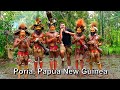
In the meantime, I found a video that made me smile. This young man traveled the world and created a "postcard" of his travels. To make his mementos more interesting, he began to dance... joyfully, badly, and with wild abandon. He encouraged everyone he met to do the same, and so they did. What an amazing thing to do. Watch this more than once so that you can appreciate everyone's unique and wonderful contribution.

This year, I hope you all dance.

Teri